
Taking Out the Boat – Solo
Have a look at this video of me Taking out the Boat – Solo. It did not go according to the Plan as I explain in the beginning of the video. Sometimes you just gotta get things done.
Have a look at this video of me Taking out the Boat – Solo. It did not go according to the Plan as I explain in the beginning of the video. Sometimes you just gotta get things done.
Sometimes all the help you have is yourself. That’s the situation I found myself in this fall. I have a very flexible schedule. All my helpers do not.
I went to the cabin on a Wednesday with the initial intent just to take out the boat. It turned into a bit more of an adventure as I had starter problems. That will be another post here soon about doin that – solo.
Once I got the boat out and back to the cabin, I decided I might as well get to the task of removing the dock. It’s the second week of October in Saskatchewan and I am the last one with a boat and dock still in the water. That’s perfect. It means I have made every effort to maximize the season. There’s also snow in the 10 day forecast. Not that that has stopped me before, but if I wait too long into October, a cold still night could start the ice forming on the lake.
I set up the camera on a tripod and put it in time lapse mode.
We have 2 security cameras set up at our cabin. One monitors the back yard and the other monitors the front yard. When they detect movement, they send an alert to my cell phone. It keeps me aware of what is moving through our yard. If I want to really tell the truth, I didn’t put them there for security. Instead they are there because I enjoy seeing what animals are wandering through our yard at various times of the day and season.
If there was a reason for security, they would certainly provide that. If a critter passes through the yard, I’m notified. I have them set on video mode so some pretty interesting happenings are caught on camera.
The latest videos can be seen at: wildlife-on-camera-2026
As security cameras, they haven’t been worth the money. The most dangerous things they have captured have been neighbours looking for their dogs, RM personnel doing annual surveys, the water and septic servicing, and a neighbour checking out the new paint colour on the cabin a few years back.
As game cameras, they have been frequently entertaining. Moose, Mule Deer, Coyotes, Foxes, Racoons, a Porcupine and the all time favorite, a Lynx.
A quick update on my quest to catch 1000 fish this summer. It doesn’t look it’s going to happen.
I’m just a bit below 700 fish but running out of days on the calendar. My last trip out to the cabin, with plans to mix in some fishing, produced not a single bite from the Perch over 3 days casting from the dock at various times. I was casting their favorite Copper John fly from the dock but I was not even seeing any activity, no fish chasing the fly. I did a flock of cormorants vigorously feeding just around the point from the cabin, while on a kayak paddle. I know where the fish are, in slightly deeper water. Challenge is that the boat is down for maintenance again.
This coming weekend is possibly my last shot at putting up some big numbers and passing the 700 mark. Eventually winter comes and before the chill of fall threatens to freeze the lake, I need to take out the boat, pull out the boat lift, and take out the dock. For some of that, I need help, and most of that help is busy for the first few weekends of October, so it’s this weekend, or risk battling difficult weather and an uncertain timeline.
A quick video describing how I get two Sea Doos loaded onto the trailer by myself. It’s a day of sadness as this unofficially marks the end of our summer as I take the most fun toys we have out of the water.
When I am at the cabin, we have stunning views of the lake, especially from our upper deck. It’s easy to look forward to every sunrise. Each and everyone, almost, is a spectacular sight. Some rainy days are too thick with cloud to have much of a sunrise, but all the rest, amazing.
It really doesn’t matter the time of the year, I’m still looking forward to every sunrise. On December 21st when the sun rises at 8:54 am.


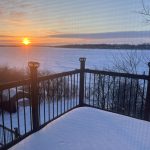
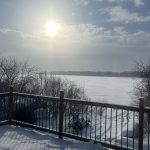
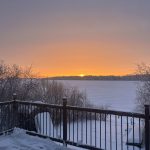
June 21st when the sun rises at 4:43 am.




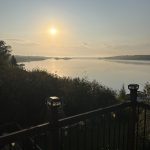
Each is a photo opportunity. Today is September 16th and the sunrise was 6:39 am.
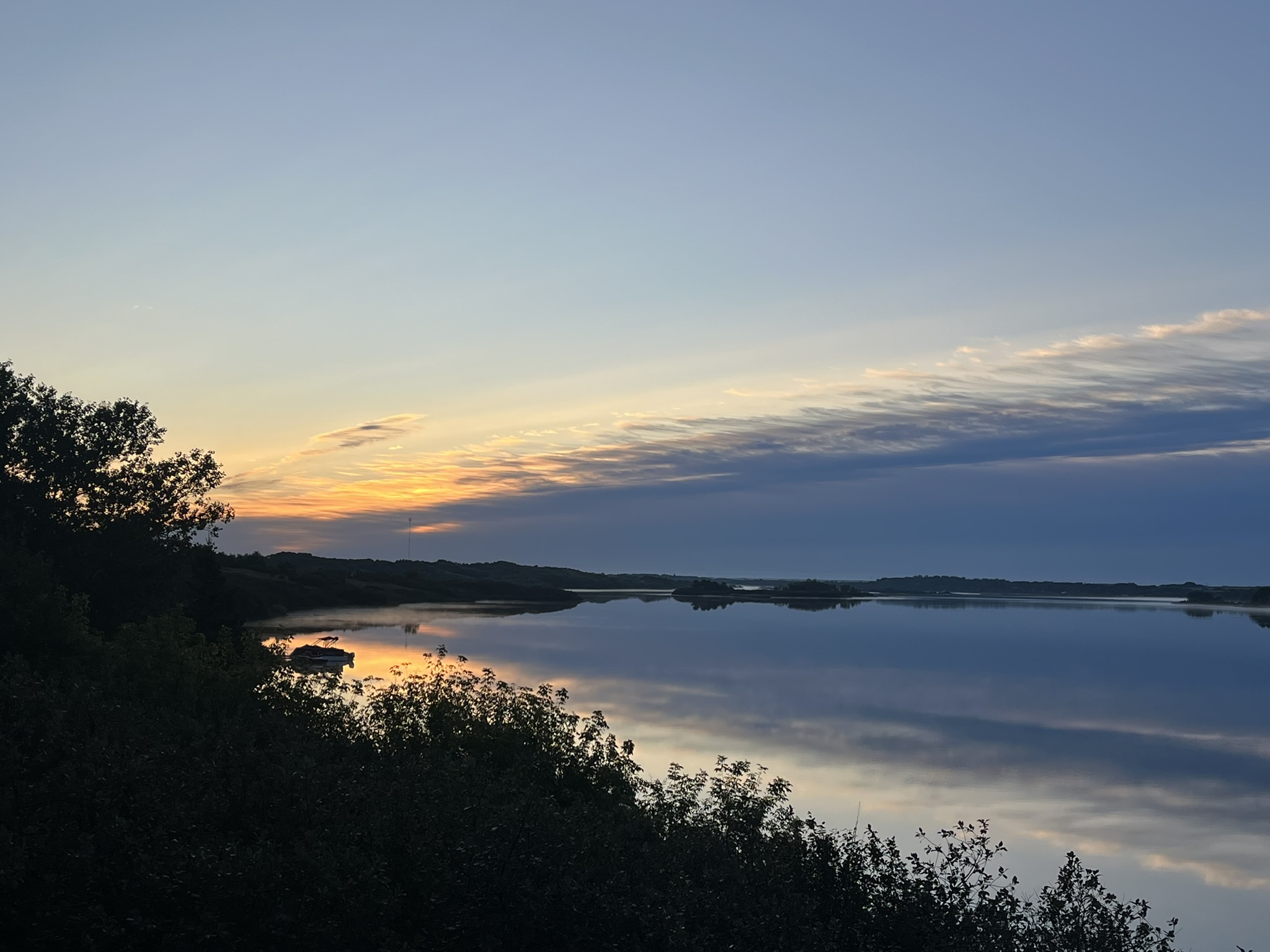
We are almost halfway in-between the summer and winter solstice, the fall equinox is just a few days ahead.
I will spend a few of the fall mornings watching the sunrise from a goose blind over a farmer’s field with a shotgun at the ready for when the geese and ducks drop their feet on approach. On days like these, the pre-sunrise light builds like the hunter’s anticipation.





Sunsets from out on the water are amazing as well. With the angle our cabin faces, we don’t see them as well, unless we are out on the water, or out on the ice.

If you did a double take when you read that headline, so did I. I recently had an article headline pop up:
First of all, catfish are ugly. I don’t think they make a great photo opportunity. But, after reading the article, now I’m interested. As described in the article, these fish are “something strong and heavy.” I have family in Winnipeg. Maybe I need to go visit. My brother can be the net man. He doesn’t fly fish so he might as well hold my net.
I have also learned that Channel catfish live in the Qu’Appelle river system and the Assiniboine River in southeastern Saskatchewan. Maybe that deserves a closer look.
Maybe Fly Fishing for Catfish needs to be on my list for 2027?
In 2015 we bought our Cabin, taking possession in mid-August. At the time, we owned a boat. Our boating adventures prior had been to load up in the morning and drive to a lake, usually Blackstrap or Diefenbaker, at Coteau Bay, and spend the day on the water, stopping on a beach from time to time, or just boating and floating. We had to pick our days as weather was the biggest factor beyond our control.
Then we bought a cabin and we could hop in the boat any time the weather was nice, or in between rain showers. Convenience, while it had a price, was very welcome.
The cabin came loaded with furniture, too much, and knickknacks and assorted other stuff that had little value. What it did not come with was a dock and a lift. Previous owners barely used the cabin and not to go out on the water.
For what remained of the first summer summer, and into the fall, we went to the cabin, hooked up the boat trailer, launched the boat for the weekend, then back on the trailer and parked it back at the cabin. During the weekend, we simply hopped in an out of the bow of the boat then pulled it up tight and tied a rope to a tree for overnight. Not ideal, but we were still smiling as we were using our boat at our cabin. We knew eventually a dock was needed and a boat lift. But the dock was first.
I found someone selling their dock at another lake. Much cheaper than buying a new one and much faster than building one (although the thought was intriguing me as it would have been a good project with my kids and they could claim some pride of ownership in the dock). Me and one of my sons hopped in the truck and went and loaded the used dock. Probably over loaded the truck, but we made it to our cabin without any incident and the next day we had a dock in the water and our boat pulled up next to it. We bought some dock bumper pads to protect the boat from bumping against the dock and all was well. We could survive without a lift for a while.
Then a year or two later I was searching Kijiji for boat lifts and found a used one, at another lake, for a pretty decent price. So I called, agreed on a price and a date and time to meet. I showed up, found the lift, ran it through my extensive testing procedures of cranking it up and down and bouncing on the frame to see if it could support me. It holds me, surely a 2000 plus lb boat?
All was good. The owner didn’t show. Instead he sent a buddy to collect the cash. In the previous conversation the owner had agreed to help disassemble and load on my truck. his buddy simply shrugged and said “I dunno’ and drove off with the cash. A big thanks to YouTube for having a video on how to assemble the lift I had bought. I watch on my phone a few times then worked backwards. Eventually I had an assortment of pieces, big and small, some oddly shaped. Thanks to ratchet straps I was able to get it loaded and strapped semi-securely.
The next afternoon I had the lift partially assembled down at the shoreline. Adjusted best as I could figure for my boat, and me and my two boys struggled our way through getting it into position in the water. Float the boat into place and it worked!
Fast forward a couple of years and we finally reached the point of the need for repairs. The lift cable wound around the crank post, through the pullies, and then connected to the far end of the lift frame. I was frayed enough in enough places that I was certain the strength was now compromised. I snipped of fraying strands of wire, a temporary solution only, but the time to eat the cost was here. No one local, in Saskatoon, or in Prince Albert, seemed to have a cable. I had considered the idea of a different gauge of cable, or a different type of steel, based on what was available locally. It made sense, dollarwise, but would it work. Fortunately, I found a replacement cable, aluminum aircraft cable, from the lift manufacturer website in Wisconsin, or Michigan, or Illinois, somewhere.
The replacement was easy. I secured on end of the cable to the winch crank and then fed the loose end through the pulleys to the far side and fastened to the frame. Was good to see the lift cable feeding through the pulleys without strands of wire splaying about as each came loose. That was 6 years ago and the cable still looks like it will last another 20 years.
This past winter I was standing on the deck at the cabin, looking out into the yard and something about the lift, which was stored in the yard just below me, caught my eye. One of the two bunks no longer looked to be one continuous board. It had a noticeable bend near the front mounting bracket.


I knew I had a repair project in the spring. Here’s what I have learned in the fixing process: it’s the labour that will do you in. The cost of the pressure-treated 2 x 8 was about $30. The labour to do the repairs was half a day. Removal of the old board was 10 minutes. Removal of the staples holding the carpet covering the bunk was the time eater. I’d put it at about 3 hours. Probably more but the low skill – high effort project also meant beer was involved.
Once the staples were all gone, I simply laid the old board on top of the new board and drilled the bolt holes in the new piece. About 200 staples later, it was re-built and 5 minutes to bolt it back on.

If I ever have to do it again, I will buy a new piece of carpet and turn it into a 30 minute fix.
I started the weekend with a yearly tally of 578 fish. My goals were first to break the 600 fish milestone then put a dent in towards the 700.
The fun in the numbers of Perch I can catch is to experiment with different flies and combinations. For now I am throwing them a Trout fishing combination, the hopper copper dropper. That’s a foam grasshopper as the floater with a bead head copper John as the dropper fly. The Hopper – Copper – Dropper.
The combo proved to be quite successful. Friday night, in only 10 casts, I landed 3 perch. For Saturday, I switched to my new #12 hoppers (see below) with a Copper John dropper. Saturday was a day with more time available to fish, in-between yard work and some other recreation. Unfortunately I never had my phone/camera with me as I was thrilled to land a 9″ Perch along with 46 other perch throughout the day. That included 2 Perch that I was able to catch on the hopper itself.
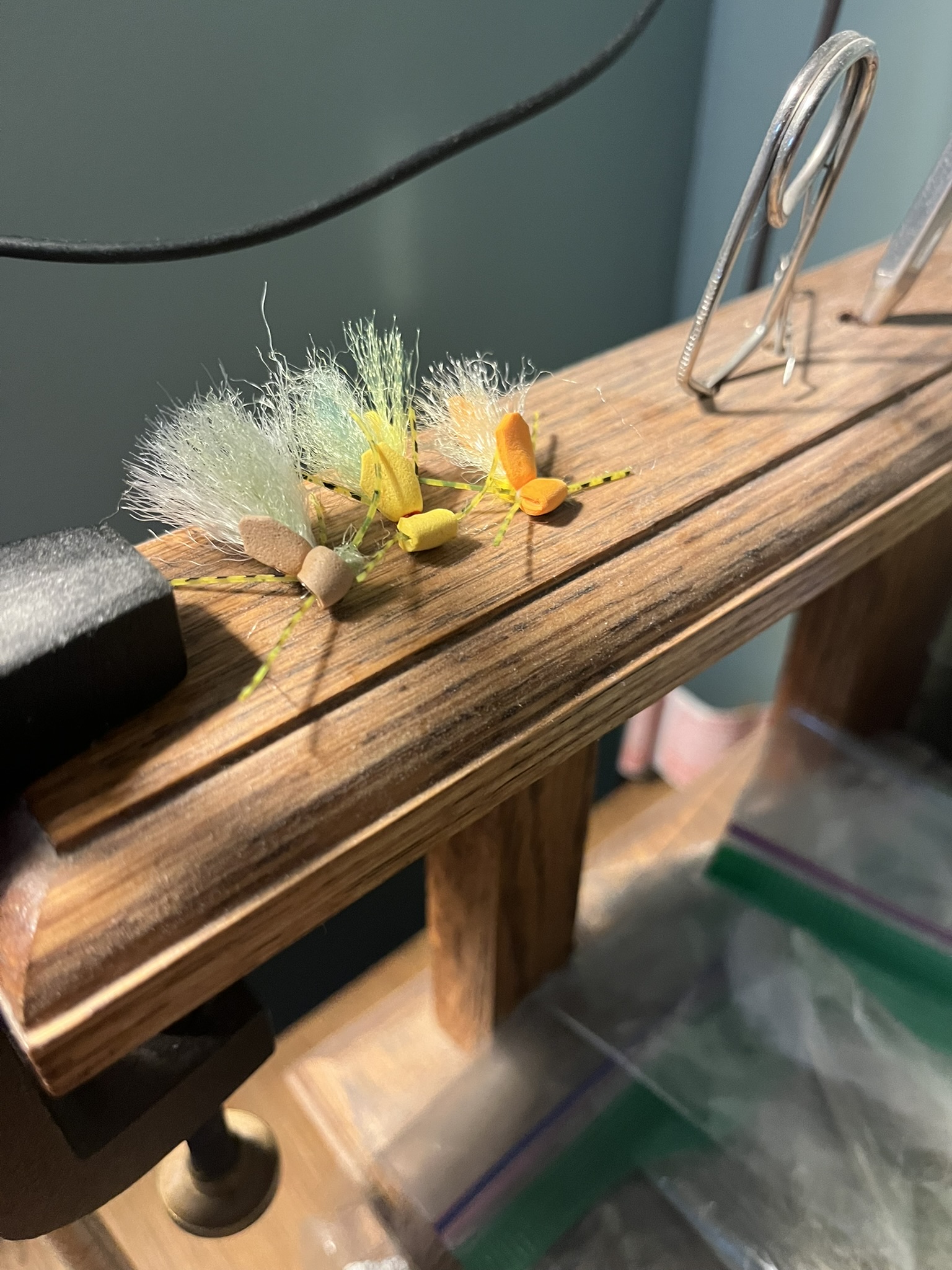
I tried this after just returning from a fly fishing trip in southern Alberta where it was the most productive pattern combo of the trip, so why not try it on perch? The Copper John has always worked well so may as well give ’em two flies. The #10 sized hoppers I was casting for the rainbows and browns last weekend was getting hit by the Perch but seemed to be too big for them, only one Perch actually hooked and landed on the hopper. So I have tied some smaller #12 hoppers to see if I can hook up a few more Perch on the slightly smaller fly in addition to the Copper John, which I know will catch dozens of fish.
With the next milestone in sight, I know the timeline is running short. It’s September now and besides fishing, I have plans to spend time knocking down some geese and ducks. Then there’s the annual maintenance tasks on the cabin and of course at some point, depending on when I have help available, it will be time to take the boat, Sea Doos, lift and dock out of the water before it gets too cold.
I’m now at 630 fish and my time out will be spent chasing after bigger fish, Pike and Walleye, with some time at the Last Call spot for Perch and likely off the dock as well. The timeline, and other activities planned, suggests that the target of 1000 is a far outside chance. But if I don’t cast a line often enough, then there is no chance, so I will continue to fish on.
I had planned for a fun weekend, relaxing, riding Sea Doos, fishing, a beer or two and later a whisky by the fire. The weekend turned out to be nothing like that.
Friday evening arrival and all was well. We unloaded the food we brought for the weekend. For this weekend, I didn’t have a tub full of tools or a truck bed full of materials to build something with. The plan was to accomplish nothing, just enjoy.
After a BBQ burger, we headed down to the dock to hop on the Sea Doos for an evening run. Problem. One of the Sea Doos was bogging down and had a vibration when giving it some throttle. Something is not right. The first assumption was a plugged intake or weeds stuck in the impeller. Unlike weeds stuck in the boat prop, simply reversing the throttle doesn’t toss these away. I pulled off the key fob, hopped in the water and felt underneath for a mass of weeds blocking the intake. This would not be the first time this has happened.
Nothing. All clear. A Miracle? I started the engine and gave a little throttle. Same result. It was not an intake issue. This was going to be more difficult. I knew (hoped) it was going to be YouTube to the do-it-yourselfer rescue.
We hooked up the Sea Doos to the dock and traded the evening powered ride for a paddle in the kayaks.
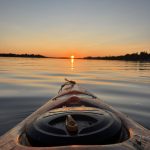


Then we spent the rest of the evening with a beverage in one hand and the other on the mouse streaming through YouTube as I learned more about the brake/reverse gate, steering connection, housing, impeller, and other associated parts on the back end of a Seas Doo. I have a good set of hand tools at the cabin. This would be a morning spent on disassembly then reverse the process to re-assemble, then off the lake waters for the powered recreation portion of our weekend. I’m not a mechanic, but I can usually work my way through a decent series of mechanical processes.
Next morning did not go as well as intended. I had put a wide plank at the water’s edge, pulled the Sea Doo up backwards, and tied it off with ski ropes to a couple trees. I could get at many of the bolts, some with limited angles or range of motion, but not all. Next I borrowed the neighbours Ski Doo lift. Better, but not quite. I made progress, but just could not quite get at some parts. I was really trying to avoid towing the Sea Doo to the boat launch, putting the Sea Doo on a trailer and dragging it back from the boat launch to the cabin. That seemed like a waste of time. Wish I would have done that to begin with.
With the Sea Doo up in the air, everything was easier. I had all the angles. Easy access, just like in the YouTube videos. It was now Saturday afternoon. The leisure portion of the weekend was fading away fast. I had taken a few breaks in the process, sometimes just to think. Sometimes to stretch out from uncomfortably contorted positions trying to get tools to impossible places.
But from this point forward, it was good news. The steering linkage I couldn’t quite de-couple only took a couple more turns. The housing and other bolts were simple, just a ratchet and extension. Pulled off what was needed and found a 1″ by 3″ chunk of driftwood caught in the impeller, wedged between a blade and the wear ring. Fortunately, we didn’t try to force this loose, before we know what the problem was, or we could have ended up with some parts to replace. In summer, who knows how long to get those, certainly longer that right now. With no damage seen and the chunk of driftwood removed, time to re-assemble. That was quick, after all, I had easy access, just like the YouTube videos. Within an hour, we had the Sea Doo back on the water and running 100%, in time for supper by the time we were back at the cabin with the Sea Doo and trailer.
After supper we did get out for a short ride, before the evening showers. The satisfaction of fixing something was rewarding, but I would have traded that for the weekend of recreation and leisure we had planned. Rain continued the next day spoiling any water fun plans.