Prairie Outdoors
  • Email
  • Facebook
  • RSS
  • Home
  • Outdoors Blog
  • Campgrounds and Camping
    • Alberta Campgrounds
    • Saskatchewan Campgrounds
    • Manitoba Campgrounds
    • Camping Photo Contest
    • Country Building Photo Contest
    • Boats and Trailers
    • ATV and Snowmobile Rentals
    • Campground Reservations
  • Hunting
    • Wildlife on Camera 2026
    • Hunting Photo Contest
    • Outfitter Guides and Lodges
    • Buy Hunting Licenses
    • The Campfire
    • Our Favorite Places
    • Know Your Species
    • Saskatchewan Whitetail and Mule Deer Seasons
    • Deer Antler Scoring Whitetail and Mule Deer
    • Scoring Your Black Bear Trophy Skull
    • Moose Antler Trophy Scoring
    • Hunting Dogs
  • Fishing
    • Fishing Photo Contest
    • Buy Fishing Licenses
    • Fishing Camps and Lodges
    • The Campfire
    • Our Favorite Places
    • Ice Fishing
    • Pike & Walleye Weight Chart
  • Outfitters
    • SK Deer Hunting
    • SK Moose Hunting
    • SK Bear Hunting
    • SK Goose Hunting
    • Alberta Outfitters and Guides
    • Saskatchewan Outfitters and Guides
    • Manitoba Outfitters and Guides
    • Trip Finder
  • Hunts For Sale
  • Games
    • Outdoor Hangman
    • Outdoor Trivia
    • Outdoors Trivia 2
    • Survey – Broder Buck vs Hanson Buck
    • Survey – Fishing – Keep or Release
    • Survey – Fishing – Lefty or Righty
    • Survey – Shotgun for Geese
    • Survey – Fishing – Pike vs Walleye
    • Survey – Fly Fishing vs Spincasting
    • Survey – Upland Birds vs Waterfowl Hunting
  • Advertise
    • Advertise Your Outfitter Business
    • Advertise Your Campground
    • Outdoors Web Site Development
    • Sponsor Opportunities on Prairie Outdoors
    • Advertise Your RV Dealership
  • About
Search the site...
  • Home
  • Life at the Cabin

First Fishing Trip of the Season

June 19, 2026 / galen / Fishing, Fly Fishing, Life at the Cabin, Outdoors

You wait a long time for the first fishing trip of the season. In Saskatchewan, for me, that means from mid to late October until usually early May. With ice still on the lake in mid-May, the first fishing trip was pushed well past the official opening date of May 5th. Add some boat engine problems to the equation and it was second week of June before the first casts were launched from the boat.

You will notice in this post, a profound lack of fish pictures. That is because there was a profound lack of fish caught. We fished hard. The fish did not play along. Here is the best fish of the 3 days.

A quick recap, we had to stop at the “Last Call Perch Hole” a few times just to reach double digits for the days. Perch was the only volume fish we managed to catch consistently.

We fished very stained water. A high volume of runoff has filled the lake with a lot of silt and high winds in recent days have pushed it around rather than letting it settle. In places we normally have 4 to 5 feet of visibility we had less than 2 feet, often only one. The classic Len Thompson spoons, Wally Divers, jig heads, big streamer flies, and all other manner of lures were thrown at the water.
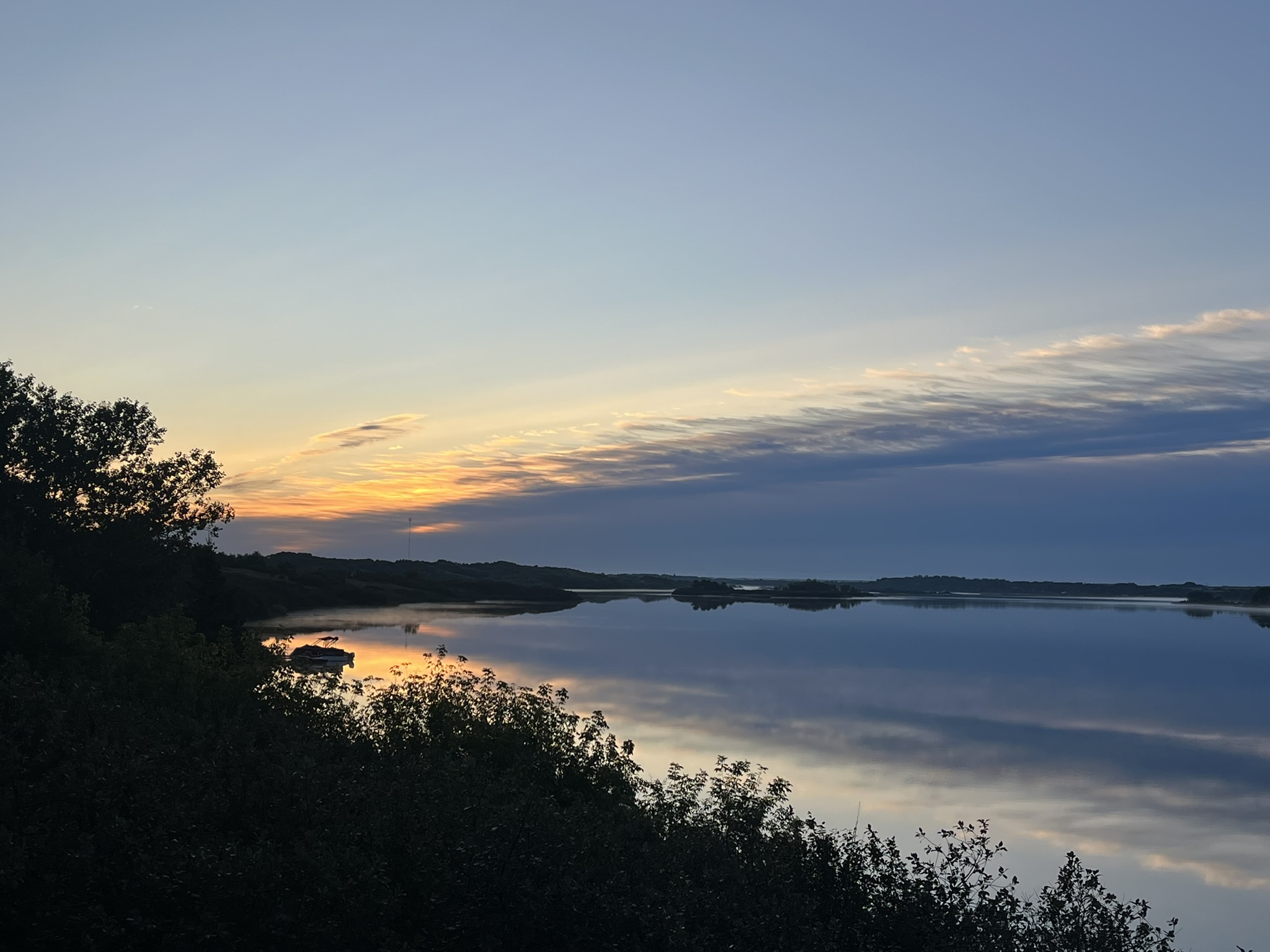
We fished all the fish producing spots that have been mediocre to good over the past couple years. Tried a few promising spots that the fish finder said were holding fish.

The end result was that we spent some time on the boat, beside the fire, ate Moose stew and Elk tenderloin, listened to tunes, retold many lies about our days in high school and since. The fishing was poor, the company was great. We will do it again.


A Lesson in Remote Boat Repairs – Bring Extra Parts

June 14, 2026 / galen / Life at the Cabin, Outdoors

Today’s lesson in remote boat repairs was definitely a lesson learned through recent experience. The lesson is pretty simple, if the boat is in a remote location (such as at your cabin, especially your dock, not your driveway at home), bring all the parts, including extras, and smaller and larger.

It’s expensive and time wasting to have to drive 100+ km to get a few $3 parts because the dealer told you the wrong part initially, really its a lesson in any remote work, bring extra. You can return the unneeded parts at a later date, if they are expensive.

This learning experience started on the day we finished putting in the dock and boat lift. With those in place, time to launch the Sea-Doos and boat. The boat was sluggish, very heavy feeling, like it was weighted down in the back. Flipping the back bench seat up to expose the engine compartment revealed it was full of water. Several possible reasons, that I could think of.

  1. Drain plug damaged or not screwed in. I had checked it and my wife had checked it. Unlikely.
  2. Engine drain plugs damaged or not replaced. I’ve never not put them back in, so also unlikely.
  3. Loose or damaged coolant hose.

I ran the bilge and that helped reduce the amount of water and I was able to get to the cabin and park on the lift. Some investigation followed and I ruled out the main drain plug as well as the engine drain plugs. When running the engine with the leg in water for cooling water intake, I could see water spraying from the right side of the engine (when facing the front). To me, this meant most likely a loose or damaged hose. I lowered my phone down to take a video of the area and I could see it was entirely something else.

IMG_0761

That the hole left behind when an engine frost plug (many other names) blows out. Likely due to a bad job of winterizing by me. I needed a part.

The boat motor is a Chevy motor, branded a Tahoe Bravo but it’s a Chevy 4.3 litre engine. I was taking my wife’s Chevy to the dealership for a free oil change so I figured I would get the part there. They did not have one but suggested Bumper to Bumper and provided me a part number. So that was my next stop and then off to the cabin later in the day for some fishing and work around the yard.


Inexpensive part. Tough spot to get at, underside of the engine, restricted area. That didn’t matter as the part spec’d by the parts expert at the Chevy dealership was the part that would fit my wife’s truck, not the much older engine in the boat. Yes, I told him what I needed it for, and he gave me the wrong part number. Of course, I only found this out when I attempted to test fit the part, on the boat, at the cabin. So it was back to Saskatoon Bumper to Bumper to get the proper part. A 2 hour round trip, plus time in store, so 2-1/2 hours of unproductive time. I did prior to the trip, call other suppliers closer but nobody had then in stock.  I did think ahead a little bit.  It’s a really tough spot on the engine to access. Probably far easier if not for all the fiberglass of a boat in the way, say if on a vehicle on a lift. Impossible to get 2 hands down there and to see what you are doing. So the repair process was going to be awkward and most by feel rather than by sight. So, again, thinking ahead, I bought the next 3 sizes of the part, 1-1/2″, 1-5/8″ and 1-3/4″, and 2 of each. Only a few $’s each part and much less of an expense than another trip to get another size.

After many attempts that day to get the part installed, I realized that there was no way I could think of to get enough force on the part, at the right angle, to tap this into place. I constructed a few elaborate mechanisms to hold the part in place, most consisting of a wooden stake so I could position the part, duct taped to a ratchet extension, to a socket, duck taped to the part I was trying to tap in. I simply cold not get a long enough hammer swing to provide enough force, to get the part to seat into the hole. Many other combinations of shorter shafts, and my max swing range was about 2-1/2″ inches. I gave up for the day, but began to devise new combinations of pieces and wood, and tools to try again the next day, that day was a failure as well.

Finally I decided to extend my parts search on the wonderful tool of Google and came across another part that showed some promise. It was a rubber based piece that expanded when the nut was turned.

This looked like the last possible solution, but it was Saturday evening, no time to get to the parts store, which was closed on Sunday. I had a buddy coming to town on Monday, to go to the cabin, to go fishing. So Monday morning I went to the parts store and bought the recommended size, based on the other part that I knew was the right size, plus on smaller, plus on larger. Within 15 minutes of arriving at the cabin that evening, all supplies had been unloaded and we had the part in place and tightened with a socket wrench and the boat was running, no extra water gushing out of the engine block. The Fishing Trip, which had been in jeopardy, was on. We fished. We ate well, and I was relieved, after much frustration, and an important lesson learned.

Next time I have a boat repair, or any repair of any type, at the cabin, I will have all the parts, in a range of sizes, bring too many tools, and hope I can get the repair done.

A Sea-Doo Makes a Terrible Kayak

June 12, 2026 / galen / Fishing, Fly Fishing, Life at the Cabin

If ever you find yourself astride a Sea-Doo with a paddle in your hands there are two conclusions you will quickly discover for yourself:

  1. something has gone wrong
  2. A Sea-Doo makes a terrible kayak

It will occur in that order as well. No one in their right mind would set out from shore on a Sea-Doo with only the intentions of paddle-based propulsion. Obviously there is a story.

My boat was not working, but that is not the something gone wrong mentioned above, just a contributing factor to the situation. Regardless of no boat, I wanted to go fishing. I have two Sea-Doos. I have managed to catch fish from those Sea-Doos before. Perch while drifting along the shore and casting back is a fun way to spend a bit of time. Add a light-weight flyrod and it’s a pretty fun time. Last summer I decided to take it up a notch and fish for Pike, on a flyrod, from my Sea-Doo. It was a success, so, without a boat, I was determined to replicate the feat.

Flyrod, one gaudy Pike streamer (the Go Go Kershaw), and my hook extractors and I set off on my Sea-Doo to one of the good Pike spots, early Sunday morning (slowly, so as to not wake the neighbours). It was quiet. The water had just a ripple from the light hint of a breeze from the East by North-East. I motored to my spot, shut off the engine, spun around in my seat and began to cast. The water was still pretty stained from Spring run-off and a big wind the day before so finding the weed bed edge and the drop-off I like to fish was a bit of a guessing game. When 1/2 the casts were coming back with weeds, it was time to move out a bit towards deeper water, hopefully the edge. Push the Start button – “whir, whir, whir”, and that’s a slow “whir, whir, whir” sound. Low battery power. Not gonna start. See #1 above, something has gone wrong.

That’s an early- season type problem. Thought the battery was well charged. The answer is not.

Current time: approximately 7:15 am. Number of boats in sight: 0. Number of people in sight on their docks: 0. Distance to cabin: much to far to swim. I was closest to the north shore, but the hint of a breeze was now a light breeze. Enough to push me slowly, too much to kick paddle against. I estimated it would take about an hour to drift to the other side, where there is a boat launch, where I was most likely to find someone who could help. Positioning myself on the back of the Sea-Doo platform, I started to kick-paddle. The increase in speed was marginal. 370 kg of deadweight (the Sea-Doo, sitting low in the water, plus my own body for ballast, was quite a hunk of material to push with my lower legs waving up and down in the water in desperation. This was not going to be a story of success, but maybe a story of perseverance. If I could get to the other side, I could maybe get a boost, or a ride back to my cabin, grab the other Sea-Doo and tow this one back.

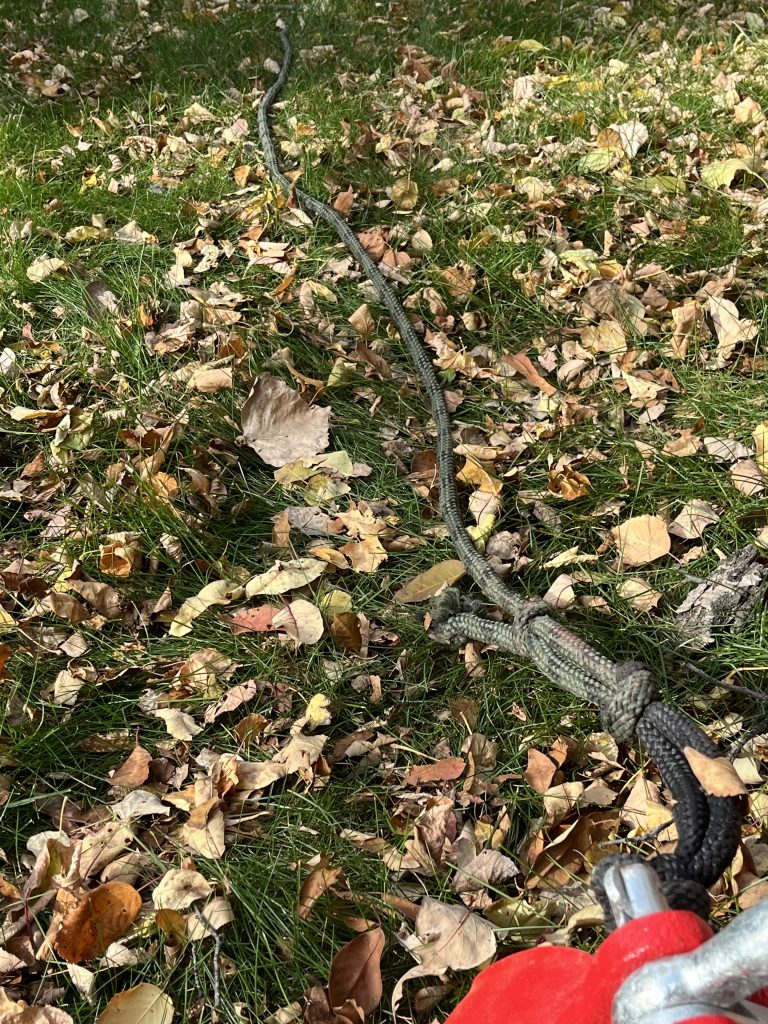
Ten minutes of kicking later and I glanced over my shoulder, hoping the objects on the far shoulder were much closer. They were not. Seemed I had hardly made a dent in the distance. But, like a shipwrecked island dweller, I started standing up and waving my arms. A boat! Perhaps I have been saved. I saw them change direction, in my direction, coming to help. Upon their arrival, the 3 generous souls and I went over my situation, talked about the Toronto Blue Jays (the driver was wearing a Blue Jays hat), the Montreal Expos (I was wearing that one), and a plan to get me part way there. With a rope tied to the front of the Sea-Doo, we were off.

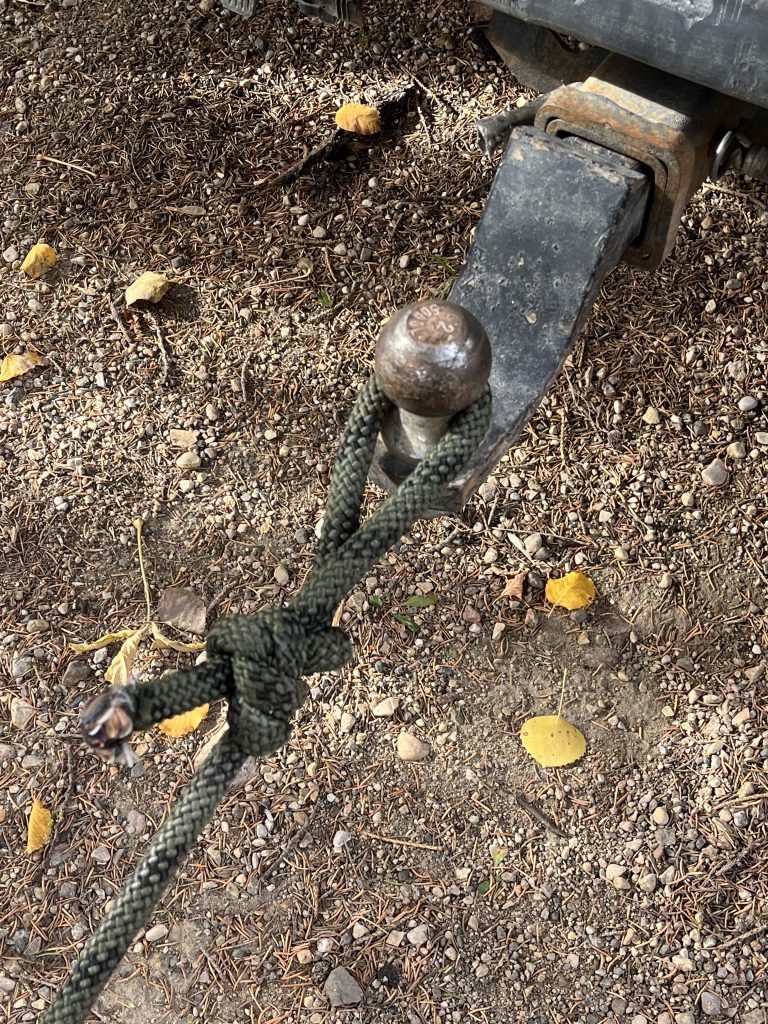
The were gracious enough to tow me part of the way, past “the narrows”, after which I was offered a paddle, and the realization that a Sea-Doo makes a terrible Kayak.

I still had a significant distance. From the breakdown, to the tow release was about 1 km. I had another 2 km to go.

Between the tow release and the next island, my phone rang, a client with a semi-desperate need for some help, some troubleshooting.

A phone you say, why didn’t I call back to the cabin for someone to come get me? Because I was at the cabin alone. I came up here to fix the inoperable boat, still not operable, but that’s another post. I also knew all the neighbours that I had the cell numbers for were not at the lake this weekend.

So my only form of thrust was paddle, on the very bad substitute for a kayak. Needless to say, the response to my client, and the help they needed, was going to be delayed.

So paddle I did. I learned, through experience that 2 strokes on the left, then 2 strokes on the right, was the proper cadence. Any more and the Sea-Doo-turned-kayak would spin too far on direction. 1 stroke was too much time spent changing sides. 2 was the optimum, in the sub-optimum setting. The total paddling travel time was likely somewhere in the 1-1/2 to 1-3/4 hours. A bad day not to wear my FitBit.

About two-thirds of the way through my return travels that morning, I spotted a group of 3 kayakers emerging from the north bay of the lake. Their double-ended paddles propelling them rapidly, and efficiently forward. That looked like a nice way to spend a Sunday morning at the lake. A Sea-Doo Makes a Terrible Kayak.

Putting Out the Dock and Lift – High Water

June 2, 2026 / galen / Fishing, Life at the Cabin, Outdoors

Putting out the dock and lift is an annual time of great joy for me. It means it’s time to act like its summer. The boat will be launched and the SeaDoos will also find there way to the dock. It’s my goal every year to have my dock out first, and to be the last to take it in.

A Different Year

This year is a bit different. There was ice on the lake far later than usual, well past opening day of fishing season (See Spring Time is Work Time). But the time has finally arrived. I have lots of muscle at the lake to get the jobs done. Kyle, Brett, Ben, Corinne, Kelsey, Kira.  I had already put out the ramp sections the weekend by myself. I was tempted to put out the whole dock by myself. Each frame section, while awkwardly shaped, is less than 45 kg so can be placed then connected.  I had figured putting out the dock myself would take about 4 or times longer than with a single helper, and I had many helping hands coming next weekend. But, the lift requires at least 2 people, better with 3, so I decided to let the others enjoy helping me put it all out.

High Water

Before we go too far ahead of ourselves, I donned the waders and wandered out into the water to do a depth check. Very quickly it was obvious that the plan had to change. (The floating dock owners are feeling pretty smart this year.) The water level at the lake is higher than I have ever seen it. By about 1-1/2 feet. That meant the dock, in it’s normal spot, would be underwater. We did some quick math and removed on 10′ section from the ramp. Then we got busy.

Next came the lift. Sure is a good idea to bring some muscle to the beach.


Now we are done. Time for fishing season!

Spring Time is Work Time

May 26, 2026 / galen / Life at the Cabin, Outdoors

From yardwork cleanup to taking furniture out of storage, the start of Spring is also the start of the work season.  This season has seen a huge delay in getting started. I usually aim for being one of the first to get the dock and boat lift set up so that I can take the boat fishing on May 5th, Opening Day.  Here’s the lake, April 28th, May 1st, then May 8th this year.


Fast forward to May 16th and my neighbour sent me a video of the blizzard currently happening. However, he did report the ice was off our end of the lake.

may-16-blizzard

Fast forward again to just a week later, May 21 and May 22nd and all was clear and the dock / lift staging was finally happening.


Got the ramp in, the start of putting out the dock, about as much as I want to do just by myself. But it did give me room to do a bit of casting and catch this mighty perch, along with some others.

But progress was made towards the delayed start to spring. The water is open! The lawn was power raked, the lawnmower is set to go. Wood is stacked, firepit is cleared.


The weather forecast for the next 7 days looks like we are just going to jump right past the lateness of Spring and right into summer.  30 degree days are coming so park the snowmobile, set up the deck furniture, and get the dock, lift and water toys launched this coming weekend.


We will add an update, or a new blog post, after this weekend once we get the dock and boat lift set up and the floaty toys floating.


The Rush of Spring and the Panic of Fall

April 26, 2026 / galen / Life at the Cabin

In Saskatchewan, our outdoor activities are often dictated by the seasons and the variable weather each change of season brings us. Our winter can be long, harsh, cold, snowy, and exhilerating fun, especially if you enjoy ice fishing or snowmobiling, skiing, snowshoeing, and other winter activities. Our Spring, Summer and Fall can be glorious, but also stretches of cool or even cold.  For some cabin dwellers, the “lake season” begins May long Weekend and ends August long weekend. For others, like myself, “lake season” begins as soon as there is enough open shoreline to paddle a kayak and ends when the water is closed in by ice.


The Spring Rush begins to get ready for summer by getting out the toys and yard furniture in preparation for fun and relaxation. The sooner you get ready the sooner you can enjoy. You know the summer is coming. Some years, like this year, a spring snow storm can push the plans a few weeks later. As I am writing this, April 25th, I am watching the tail end of one of these snow storms which has dumped a fresh later of 30 to 40 cm of snow.


Fishing season in the Saskatchewan southern fishing zone begins May 5th. The chances of launching a fishing boat appear to be close to 0%. Meanwhile, back on land, once the snow melts away and the yard turns from soggy so dry, the preparations will be underway. Un-shedding the outdoor furniture, cleaning off the winter dust. Checking the boat lift and doing any maintenance, inspecting the dock, running through the pre-season checklist on boat and Sea Doos, charging batteries, and waiting for the sun to do it’s melt job.


Fall is Panic mode. You know winter is just around the corner and you need to get the toys and yard furniture in storage before it’s too late. The later we get into the season, the more desperate we become in our race against the seasons, especially the first snowfall. This is the tradeoff, the desire to extend the season as long as possible, and the need to store it all away. Squeeze in another ride on the Sea Doos, a few more fishing excursions, a paddle on the kayak or paddleboard. Sometimes, you are a little late. One year we couldn’t make to the cabin in time and the lake froze a solid 4″ thick before the dock was taken out.  We thought we were going to have to use the axe to chop all the ice. Then my son had the smart idea to just unbolt the top deck of the dock and we carried it off. A little chopping to free the legs and it might have been the easiest dock removal ever.

Even though we are sad to see summer turn to fall and quickly winter, winter isn’t so bad either.


When your goal is to maximize the length of your lake season, you realize the Rush of Spring and the Panic of Fall is just what it takes to squeeze out everyday of enjoyment from our favorite season, but that the seasons are always beyond our control. The outdoors seasons change is our annual swapping of toys and furniture to match what nature is throwing at us.

Things I am learning about Snowmobiles – Part V

April 11, 2026 / galen / Life at the Cabin, Snowmobiling

The Repair $’s Add Up

What I learned this Spring is that costly repairs hit a new snowmobiler hard.

We got into snowmobiling at a budget price, buying a low mileage used snowmobile. It was a great price as I shopped around online for a few months prior to making my purchase. The test drive was excellent. Everything was in great shape, a couple of scrapes. Machine ran extremely well.

The first few rides were 100%. We parked it at the cabin and took some runs out on the lake and in the ditches and across some fields. Had a great time. Burned through a few tanks of gas. Enough to know this machine was a keeper. If we did not like it, we would have no trouble getting our money back out and we would have satisfied our curiosity.  We definitely plan to go the other, to buy another machine for my wife and spend more winter time at the cabin. I even have plans to build another storage shed under the main deck to park the snowmobiles when we are away and through the off-season. Seems there never enough storage, anywhere, so we will build more.

Now back to the machine. After a few weeks of riding, my son met me out at the cabin to go for a few rides. But the snowmobile was not 100%. We started it and let it warm up like we always have done, but it seemed under powered.  We shut it off and restarted, and then it ran great. Full power, full fun. His dogs soon learned that chasing him out in the open was just not going to work so they hung around with me and we watched him ride around and get familiar with the machine. We traded off and I took a few runs around on the lake and through some ditches.

The next time out, it was again under powered and it took a few more cycles of shutting down and restarting to get back to full power.  The issue? Maybe bad plugs? I changed them. No better. So I parked it. Next time, it was worse. Really poor idle, 1/2 power, stalled a number of times.

The good news, is my neighbour, super helpful guy, is from the area, knows everybody, and his brother in law is a mechanic who used to race Polaris snowmobiles. I have a Polaris. He has diagnosed the problem and estimates the repairs at $2200. Judging by the work and parts required, that’s likely a huge savings off a dealer repair. He’s local, and I know I can trust him simply through knowing I can trust my neighbour. The saddest part is that for the past month here in central Saskatchewan, we have had plenty of snow and decent riding conditions, while areas to the south are melted away. I could have been riding another 4 or 5 times.


So it’s off to the mechanic. The budget price entry into snowmobile ownership has gotten more expensive, but I am still approximately at 1/3 the cost of a new snowmobile and this one should be 100% ready for when the snow falls again in the winter, only 7 months away.

Things I am Learning About Snowmobiles – Part IV

March 27, 2026 / galen / Ice Fishing, Life at the Cabin, Snowmobiling

Ice Fishing Convenience

Prior to having a snowmobile. I would load all me ice fishing gear, auger, pop-up shack, heater, and more and drive to a boat launch for access to the lake and follow some plowed path to a spot near some other shacks and then set it all up. From my cabin to having a couple lines in the water was about 1/2 an hour with the shack popped up and in place and the heater just started. Really not bad at all. Just limited by the access I have to the lake and plowed paths. When there is deep snow on the lake, venturing off the paths can lead to getting hung up on the snow.

But now I have a new way to approach ice fishing. I already have a utility sled and now what I can do is hook the sled to the back bumper on the snowmobile and load it with my gear and head out to fish, anywhere I want. There are some spots I want to fish that are not very accessible, unless one has a snowmobile. One spot in particular is a great spot to hook Perch and is not far from my Cabin. Previously unfishable by me in the winter. I went there last week on a beautiful sunny day. Did not bother with the shack as my snowmobile riding clothes were plenty to keep me warm. Drilled a few holes and started pulling out Perch almost right away. Rode back to the Cabin for some supplies and back at the fishing for a few more hours. Wonderful day.

There are other spots I hope to try this weekend, the last weekend before the ice fishing season closes. One spot is just off a shelf where the water depth falls from 6 feet to 20 feet and is one of my summer fishing hot spots. I will know tomorrow if the Pike are there in the winter as well.

Beyond the Purchase – Some Other Costs of Snowmobile Ownership

March 3, 2026 / galen / Life at the Cabin, Outdoors, Snowmobiling

The Cost of Snowmobile Ownership. It’s well beyond the purchase price or finance payments. Like anything that moves, has an engine, and is designed for recreation, there are additional costs. Most of them quite obvious, I think, but here’s what we have encountered.

Clothing & accessories. We were fortunate to already have a good supply of winter wear, ski pants, warm gloves, boots, etc. and 2 helmets we bought for quadding. I do dome ice fishing so I have a good idea what clothes are needed for a Saskatchewan winter. The only thing that we really were missing was goggles. My old ski goggles were not in very good shape so a $40 investment and we were all geared up. We could upgrade some gear. Our snowmobile has a plug in cord for a heated visor. We could buy a couple helmets with that feature built in. My neighbour has one. Sure looks handy. $200 – $550. I do strongly encourage the use of a base layer system, what we used to call long underwear, but now it’s more technical. I have mine from hunting. They are thin, light, and make a very noticeable difference. An inexpensive set for both top and bottom can be found for $50 – $60.


Gas. The owners manual says to use 91 octane (premium).  That was $33 for a jug of gas last weekend. An extra gas can. This seems like a good idea, especially as most snowmobile riding is going to occur away from roads and further from a gas station. Running out of gas would make for a rather lengthy trek to the pumps.  A brief search lead me to a few name brand accessories including accessory brackets and gas cans for a bit over $300. As one of the reviews on the product said, “Expensive, but what accessories aren’t!”. If we get into some trail riding, we may have to dig into our wallets for these. Once we buy a second snowmobile, I think we will just carry one emergency gas can.

Maintenance / repairs.  Replacement of one of the scratchers was my first repair. I broke one in reverse. I knew to put these up before backing up, but didn’t. I found a pair at Canadian Tire on clearance for about $20. Normally these sell for $40 to $60 a pair. I learned in this case, that universal is not universal as a replacement if it doesn’t match the original. The original was  also an aftermarket accessory and they have slightly different spring hole placement locations. Just enough to need a little bit of a field fix, but we got the new one installed.


When things go wrong: spark plugs. This weekend was planned to be a weekend of riding with others. One of my sons was already out at the cabin and I joined him to do some riding. He just completed his SK Snowmobiling Safety Course so that he can ride legally. The cost of this course is only $50 and can be done online. See more at sasksnow.com/safety/. His comments about it were that is was a lot more practical than the Canadian Safe Boaters Course which has a ton of maritime regulations which are not very applicable to land-locked Saskatchewan. There was some fresh snow so we were expecting a few good rides. We fired up the snowmobile and let it warm up then I went for the first ride. The sled was very boggy, very underpowered, like it was over-choking, or some other similar problem. Just no power that I knew it had. I went for a short run and then let my son ride and I could tell something was not right. I waved him over, shut it off, restarted, and suddenly the power was back. We rode for a while, taking turns, took a break for lunch and the power problem was back. After a few shut down and restarts, it was running good again. The next day I went for a good ride, but had to go through the shut down and restart again to regain full power.

Making Tracks:

When it was at full power, it was a great ride. The next day, Saturday, was a day I had been looking forward to for a few weeks. My neighbours have sleds and he has a farm a few miles from our cabins and we were going to go riding together in the hills near his farm. I was very much planning for a great day of exploration and some fun with my neighbour / friend. His machine ran great, mine didn’t make it more than a 1/4 mile from the cabins when it started bogging down again and actually stalled. I managed to limp it back to my cabin while he carried on and went to play in the snow. After some pondering, as well as discussing the performance issues with my neighbour, we are making a guess that I have one if not two faulty spark plugs and when it is running on low power, it’s only running on one cylinder. I have searched for the symptoms of snowmobiles running on faulty spark plugs and the Internet supports the idea that changing plugs will improve performance. I had a similar low power issue with my boat last spring and fresh set of plugs brought the boat back to full power. The cost of two new spark plugs are less than $20 so as a maintenance expense, pretty minimal.

Heading out for a ride:


A young Mule Deer follows the tracks:

Registration. If you plan to access any public lands, such as lakes, ditches, trails, then registration is required. It’s quick and simple at sasksnow.com/registration/. The cost is:

  • $150 registration fee per year
  • $79 (pro-ratable) insurance premium

Transportation / trailering. We have not made the plunge to a snowmobile trailer. Although, as soon as you have a trailer, you start to think about other good uses of it. Our mid-term plans are that we will buy another snowmobile in fall along with a trailer. Then we can haul the sleds to the trails or go to poker rallies. You can buy a hotel on wheels for your snowmobiles for $45,000 down to a used flatbed snowmobile trailer for about $2500 or a bit less, as low as $1000 for a used flatbed trailer, not specifically designed for snowmobiles.

Some accessories are just not necessary. Our snowmobile came with a storage pouch mounted on the center of the handlebars. It would be a handy place to store a few small items, but there is storage just behind the seat as well. It is also in the perfect position to block the display including the speedometer and temperature gauge. It’s been removed.

Things I am Learning About Snowmobiles – Part III

February 22, 2026 / galen / Life at the Cabin, Snowmobiling

Put up the Scratchers. I learned this the old fashioned way, through experience. After going for a ride on the lake with the scratchers deployed, I rode back into the yard, and reversed into a spot to park. Then I remembered the scratchers were down. Left side, under a little stress and maybe bent slightly. No problem, can bend that back into shape. Right side, different story. It was only half as long as it should be. Yep, I snapped that one. The good news, i found a set of universal scratchers at Canadian tire at 65% off, only $23 and before next ride it’s a simple one socket wrench job to replace the broken part.

Headlight aiming adjustment wheel.  I have glanced through the owners manual. Read the important parts, but after several rides, I was still left wondering what this adjustment wheel was for.

It’s the headlight adjustment wheel. Spin it left or right to lower / raise the angle of the headlight. I haven’t riden at night yet so that’s a feature for another day, or night.

oil

Fuel grade (91 octane). This part of the manual I did read. It recommends a 91 octane fuel, and not to use ethanol fuels. Same stuff I use in other toys so the gas left over from summer in the jugs is good to go.

The windshield. I remember on our old Polaris we had when I was a teenager, we had a full height plastic windshield, we broke that a few times and paid our of our own pockets to replace it. That was not something our dad was willing to foot the bill for. I don’t remember ever paying for gas so I guess had the good end of the deal. It was always difficult to see through. This Polaris has a lower windshield, actually no windshield. Good goggles and that doesn’t seem to be any worry.


Speaking of goggles,  invest in a good pair of anti-fog, goggles. They are well worth the convenience. I tried an older pair and had problems with fogging and had to pull them down. Okay for a short ride but if it was snowing, that would have been a problem. My snowmobile also has a heated face shield wire. I don’t have that feature on  my helmet so maybe something to consider for a future helmet upgrade. While this feature sure sounds like a luxury, I’m it would be well worth the convenience.

As I am learning, when you head out and go for a longer run in the countryside or down the lake a few kms you want a machine and gear you can trust. It wouldn’t be fun to be stuck a few kms of deep snow away from the cabin in -20 C temperatures with a little Saskatchewan windchill to with the walk.

123

Recent Posts

  • First Fishing Trip of the Season
  • A Lesson in Remote Boat Repairs – Bring Extra Parts
  • A Sea-Doo Makes a Terrible Kayak
  • Putting Out the Dock and Lift – High Water
  • Spring Time is Work Time

Categories

  • Bear Hunting
  • Camping
  • Deer Hunting
  • Duck Hunting
  • Fishing
  • Fly Fishing
  • Goose Hunting
  • Hunting
  • Ice Fishing
  • Life at the Cabin
  • Outdoors
  • Snowmobiling
  • Uncategorized

Subscribe to Updates

Subscribe to our Posts