Prairie Outdoors
  • Email
  • Facebook
  • RSS
  • Home
  • Outdoors Blog
  • Campgrounds and Camping
    • Alberta Campgrounds
    • Saskatchewan Campgrounds
    • Manitoba Campgrounds
    • Camping Photo Contest
    • Country Building Photo Contest
    • Boats and Trailers
    • ATV and Snowmobile Rentals
    • Campground Reservations
  • Hunting
    • Wildlife on Camera 2026
    • Hunting Photo Contest
    • Outfitter Guides and Lodges
    • Buy Hunting Licenses
    • The Campfire
    • Our Favorite Places
    • Know Your Species
    • Saskatchewan Whitetail and Mule Deer Seasons
    • Deer Antler Scoring Whitetail and Mule Deer
    • Scoring Your Black Bear Trophy Skull
    • Moose Antler Trophy Scoring
    • Hunting Dogs
  • Fishing
    • Fishing Photo Contest
    • Buy Fishing Licenses
    • Fishing Camps and Lodges
    • The Campfire
    • Our Favorite Places
    • Ice Fishing
    • Pike & Walleye Weight Chart
  • Outfitters
    • SK Deer Hunting
    • SK Moose Hunting
    • SK Bear Hunting
    • SK Goose Hunting
    • Alberta Outfitters and Guides
    • Saskatchewan Outfitters and Guides
    • Manitoba Outfitters and Guides
    • Trip Finder
  • Hunts For Sale
  • Games
    • Outdoor Hangman
    • Outdoor Trivia
    • Outdoors Trivia 2
    • Survey – Broder Buck vs Hanson Buck
    • Survey – Fishing – Keep or Release
    • Survey – Fishing – Lefty or Righty
    • Survey – Shotgun for Geese
    • Survey – Fishing – Pike vs Walleye
    • Survey – Fly Fishing vs Spincasting
    • Survey – Upland Birds vs Waterfowl Hunting
  • Advertise
    • Advertise Your Outfitter Business
    • Advertise Your Campground
    • Outdoors Web Site Development
    • Sponsor Opportunities on Prairie Outdoors
    • Advertise Your RV Dealership
  • About
Search the site...
  • Home
  • Fishing
  • Fly Fishing (Page 4)

Fly Fishing for Pike

May 5, 2015 / galen / Fishing, Fly Fishing

Fishing for Pike doesn’t normally turn my crank.  On a recent trip, I tried fly fishing for Northern Pike.  My opinion has changed largely because any fish on a fly rod is a lot of fun.  Even a big slimy toothy ugly Northern Pike is a challenge to catch.

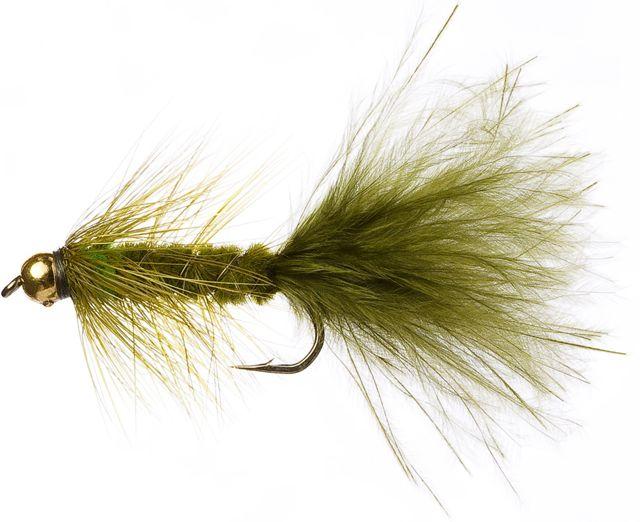
If you find a pike infested area and the bite is on, almost anything will catch them, as long as it’s gaudy and moving.  That’s what makes fly fishing for pike a challenge.  In order to keep a large spoon moving with a spin-cast rod, just reel it in.  Then cast it back out and reel it in.  If there are hungry pike nearby, they’ll chase it down and bite it.  Often, if you stop the retrieve, they’ll turn away.  With fly fishing, it’s a different game with casting heavy flies called streamers used to imitate bait fish or other prey.  Some fly fishers (myself included) will use a mouse pattern and cast it into the reeds then yank it through.  The big Northern Pike lurking in the reed think it’s a rodent that has fallen in and attack with a fury.  Pike have been reported to strike their prey, or your lure, at speeds up to 30 mph.  With a mouse pattern floating on the surface, the ambush is swift and vicious.  You’ll definitely know when something has struck your fly.

With the speed of Pike being much faster than you can possibly strip in your line, you may as well strip quickly to attract a strike.  Pike will attack if the food looks at all edible so make your streamer swim quickly with a fast stripping action.

Once on the line, you can’t hog the fish in like you would with a spinning reel or bait cast reel.  You need to remember you are using a lighter tackle and different equipment.  When possible, play the fish from the reel.  If it wants to run, let it run.  There are few sounds like the zzzzzziiiiiinnnnnng of a fly reel with a strong fish pulling at it to get your heart pounding!  

Maybe the most important piece of tackle is a steel leader.  Not the same steel leader as your casting line but a fly line pike leader to fend off the sharp teeth.  If you try to use normal leader and tippet combination, say goodbye to your streamer and your Pike.  Shock leaders, as they are normally called, are made for casting streamers with a fly rod.  Another important important tackle tip is to use a heavier weight fly rod.  If you normally use a 5 or 6 weight for trout, step up to an 8 weight for pike.  You’ll cast the heavy streamers easier and the extra strength in the rod will help with the bigger fish.

If you’re in for an adventure, try fly fishing for Pike from a belly or float tube.  Unlike trout fishing from a belly boat, pike are much large.  Your net might not be big enough if you hook into a 36″ plus pike”  Laying a big fish across the bow of your belly boat gives you a real indication of how much bigger a pike can be than a trout.  Not only the length of the fish but the power that goes with the larger size.  It’s a real thrill when you actually get towed in a belly boat by a pike or when the fish you have hooked turns you 360 degrees.

Don’t Leave Your Flies on the Table

April 28, 2015 / galen / Fishing, Fly Fishing

My house is quite often a hurricane of activity.  My kids, ages 7, 5, and 2 have boundless energy and are involved in any sporting activity that includes a ball, a club, a stick, or a puck.  That means I’m often rushing from one floor of the house to another to be the intervening referee, sometimes the goalie, sometimes the pitcher, many time the retriever or objects thrown, batted, shot or kicked too high.  The point is, I rarely have more then 5 minutes of time in a row to spend on any activity until after the kids go to bed.  Nonetheless, one day this spring, I was getting organized for a week long get away.

My various rods, normally stored in my gun cabinet to keep the kids from tangling all the lines together, were in the living room.  My tackle box was sitting on my desk.  My fly boxes, 3 of them, were in the living room, kitchen, and bathroom.  I was testing the sinking rate of some of the flies in a tub full of water in the bathroom when I was summoned to solve a “who hit who back first” argument in the toy room.  At the same time, my wife was busy cleaning the living room for some company coming that night, and swearing at me for leaving my rods all over the floor.

After getting the hockey game back on track, I decided to sort through some of my dry flies in the kitchen.  I pushed the rest of the stuff on the table aside to make room for the flies and began to remove them from the fly box one by one.  I organized them by size and colour, knowing full well after the first full day of fishing my box would be in complete disarray again.  With about 10 flies out of the box, a crash was heard from the downstairs toy room.  I arrived moments later to discover a broken light fixture but no broken kids.  No opportunity to try out alternative uses of head cement today!  Shop Vac to the rescue and the game was back on.

I started back upstairs, but remembered the sink rate experiment going on in the bathroom and resumed that activity for another 5 minutes before I had to rush to referee the next dispute.  I finally returned to my fly sorting about a 1/2 hour after I had left it, to discover all my dry boatsmen were gone from the neat row I had placed them in.  I also noticed the supper dishes had been removed from the table and the dishwasher was running.  I quickly surmised that my wife had whirl winded her way through the kitchen on a cleaning spree, and swept the table free of debris.  “Wife!”, I called out.  “Did you clean up in the kitchen, ’cause I was just about to?”  Her reply was “Yes.  I don’t have time for you to get to it.”  “Where did you sweep the stuff from the table?”, I inquired.  “Into the empty corn flakes box by the back door. Why?”, came her puzzled reply. “Because you just swept $20 worth of my flies into the trash.”, I answered.  “I thought they were crumbs from the kid’s plates.”, was her guilty reply.

I dumped the flies out, back onto the table, along with a few crumbs the kids had left, and continued my sorting and replacing back into the fly box from which they came.

Other places not to leave your flies (and you can imagine why):

    • your bed
    • the living room floor
    • seat of your truck
    • floor of your truck
    • your pocket

Trial and Error

March 17, 2015 / galen / Fishing, Fly Fishing

It’s become very clear to me, that dumb people shouldn’t fly fish. I know this because today I was one of the dumb people.

Fly fishing is like a scientific experiment. It takes technique. It takes skill. It takes trial and error. Today it was mostly error.

The basic premise behind fly fishing is to use a man made artificial imitation of the fish’s food source and try to present it in a way that will cause the fish to bite it. That’s a fairly difficult task, but one that can be learned, practiced and improved. Today, I took a giant leap backward in the demonstration of my skill. My only solace is in the fact that I was the only one to know how dumb I was this morning (until now).

At 5:00 am I was awake. The weather on this July morning was quite pleasant so I went fishing before work at the trout pond just north of where I live. I parked, grabbed my rod and vest and proceeded to the bank to get started. My line had on a mosquito pattern from a few nights ago. After three casts, one hook up! A short struggle and a release and I was convinced the day would be a great one. Then I though about the coffee I left on the hood of my truck. So I laid my rod down and walked the 50 feet to get my cup, leaving the fly floating in about 2 inches of water less than 12 inches from shore. When I returned less than 60 seconds later, my rod was about to tip over the bank into the water and down the steep slope as an adventurous and determined trout was about to make off with my fly, my line, and my rod. Dumb mistake #1: never leave a fly unattended. It almost cost me my rod (and the rest of the morning).

I moved down the bank to the far side of the pond, to my favorite spot, furthest from my truck, as the sun broke through the clouds, off the water, straight into my eyes. Dumb mistake #2: always have your sunglasses with you. I struggled against the sun, then finally moved of it’s path to a less desirable spot, with poor footing. Dumb mistake #3: wet rocks soon equal wet shoes and pants. It didn’t take more than 3 casts to hook a fish and for me to miss a step and plunge knee deep into the water.

I figured if the mosquito pattern was working so well, why not try a caddis fly? Dumb mistake #4: if your catching fish, don’t change your fly. Well, the caddis got no attention. I spent the next 30 minutes trying to convince myself the cast would be the one to attract a trout to the caddis. 30 minutes of being dumb. Thinking like a scientist, I tried another fly, not at all like a mosquito. Dumb mistake #5: keep switching away from what works. Another 30 minutes of casting practice.

By now, it was almost time to had back to the truck and head to work. I decided to give the mosquito pattern the duty as I planned to walk and cast my way back to my truck. Between me and the truck were about 4 large bushes and a wire fence running in line with my path. I made a quick mental note and started casting to the rises of the trout. I quickly hooked a small fish and released after a brief struggle (proving my past hours experimentation with other flies an error). After releasing, I moved past the first bush and watched for rises. I spotted one proceeded to put my back cast into the first bush I passed. Dumb mistake #6.1: look behind you before you cast. I untangled and looked to the water again for rises then put my next back cast into the same bush. Dumb mistake #6.2: look behind you before you cast. I untangled and looked to the water again for rises then put my next back cast into the wire fence. Dumb mistake #6.3: look behind you before you cast. After untangling, I glanced at my watch, my morning had run out of time.

Opening Day

March 10, 2015 / galen / Fishing, Fly Fishing

Like a bad April fools joke, Saskatchewan closes its lakes, ponds and rivers to fishermen and fisherwomen for a month or so. Now I know it’s only a month but it seems like forever. The funny part is that all winter, (and the winters here are longer than the summers), I don’t fish. I could never get into the ice fishing thing. Something is just missing. Fly-fishing and a lake covered in three feet of ice don’t mix, I like to see the water and not walk on it and I am not a polar bear, I need warmth. But during the winter I could fish if I wanted and that’s what makes the month of April and first part of May so bad. I’m not allowed to fish and that’s usually when the itch starts. I go through my gear, checking and rechecking everything, I buy fishing supplies, troll my way through every fishing store I can find, and generally do dumb things in preparation for opening day. (This year I sat in front of the TV watching fishing shows in my new float tube for two hours). It’s like Christmas in May, counting down the days, five more sleeps, four more sleeps etc.

So the trip was planned. Six of us were going on opening day for a one-week trip to Chitek Lake, Saskatchewan, two guys for a bear hunt and four of us fishing. Chitek lake is five hours north of Regina and is surrounded by other lakes containing trout, pike, and walleye. I could hardly wait.

We were going to be fly-fishing for pike. Now I have caught a pike with my fly rod before but totally by accident (I was practicing my casting off of a dock) and it was exciting. Saskatchewan pike on a 6-weight fly rod can be quite a fight. I proceeded to read everything that I could find on the Internet about fly-fishing for pike. I bought some special leaders to guard against those sharp teeth that are not present in a trout, bought way too many pike flies and generally spent two weeks thinking of nothing else.

Finally opening day arrived. My friend and I drove to Saskatoon to meet with the other members of our party. We ate a lot, talked a lot and about 8 p.m. that night realized that we could have been fishing. Saskatoon has a small trout pond and we jumped in the truck heading out on opening day. We caught one fish, or more specifically I caught one fish. A whopping 10 inch rainbow trout. As darkness fell and we walked back to the truck, I realized one thing. I have caught a fish every day this season.

Fly Fishing for Perch

November 10, 2012 / galen / Fishing, Fly Fishing

I went belly boating into a shallow bay in early Aug with the thought of tossing streamers in to the reeds for pike. Immediately I started getting hits, little hits, tap tap hits that perch make. Perch on the fly? Why not? I switch to a Mickey Fin fly to see what would happen. More hits, then more, then more of the tap tap perch bites. With a few hook sets, I pulled in a couple Perch, a beautiful little fish, very colorful. They had been hooked on the outside of the mouth. Hmmmmm….., hook to big? I think so. What do Perch love, and walleye for that matter? They love the leaches. I switched to a leach imitation fly and the quest for Perch was on!

Obviously I had the wrong gear, but I needed to improvise. To throw the streamers to the big toothy pike I had imagined, I had brought out my 8 weight fly rod equipped with a steel leader and snap hook. Too much for the 1/2 pound Perch? Well, ya, it was, but when I switched the steel leader to 4 feet of 1X tippet followed by some 4X tippet, I had a better feel for the tapping action and made more consistent hook up with the perch. In the next 2 hours, I caught 25+ fish in 2 hours. 4 or 5 of these Perch of 7 plus inches and a few 9 inchers that would have been keepers for anyone fishing on the docks nearby. For each perch I released there were 3 that I hooked but lost. While I had improvised with tippet as a leader, I was still too heavy on the gear. An 8 weight is appropriate for a nice sized pike, or the Idaho steelhead I was catching last April. Tomorrow I would go lighter. A 4 weight rod would be ideal, but a 6 weight is the lightest fly rod I own.

The next two mornings I was up early, but in no rush. A cup of coffee then me and the dog headed down to the same bay, minus the boat, flippers and waders. It is August, the water temperature in the bay was a comfortable 71 degrees. Waders were just making me sweat the day before and the bay was shallow enough to stand in nearly everywhere I had paddled my way to the day before. My 6 weight fly rod was set up with a 7-1/2 foot floating leader followed by a few feet of 4X tippet and size 14 hook with a leach pattern tied the night before. A smaller hook did exactly what it should, it caught more fish, including the tiny ones. It also increased the bite to land ratio where I was now releasing at least half of the Perch that bit the hook. How many on that day? Maybe 50 fish for the first two hours of the morning. My dog came swimming to me each time I hooked a fish, ready to chase it away upon release. She’s really good at that. Eventually she tired and laid on shore watching, wishing I would flip a fish her way.

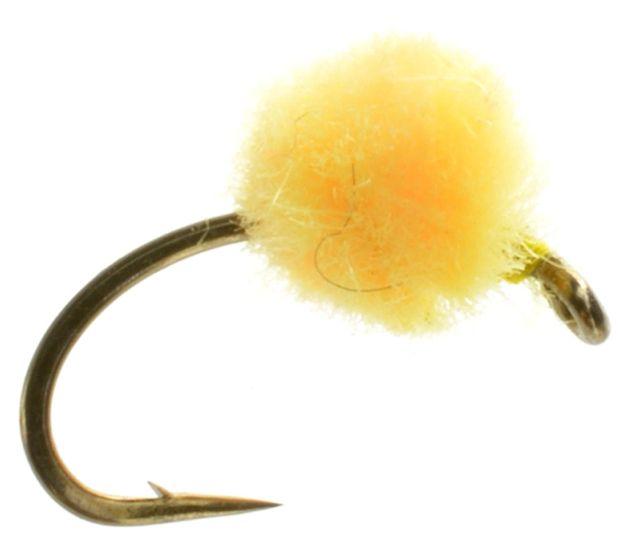
I changed my plan again for the last day, deciding to target only the larger Perch with an egg sucking leach, a #10 hook size. The result was many hits but only fish big enough to get the hook in their mouth were hooked and landed. After catching over 100 fish the previous 3 days, I had a pretty good feel now for the TAP TAP of a seven inch plus Perch compared to the tap tap of a smaller fish and generally when I set the hook it was worth it.

I realized on the drive home, that originally I had set out to hook up with some pike on a fly rod from by belly boat but ended up just wading and yanking out Perch after Perch. The Pike can wait, the Perch were a blast. I’ll be back for the big ones later in the year.

1234

Recent Posts

  • First Fishing Trip of the Season
  • A Lesson in Remote Boat Repairs – Bring Extra Parts
  • A Sea-Doo Makes a Terrible Kayak
  • Putting Out the Dock and Lift – High Water
  • Spring Time is Work Time

Categories

  • Bear Hunting
  • Camping
  • Deer Hunting
  • Duck Hunting
  • Fishing
  • Fly Fishing
  • Goose Hunting
  • Hunting
  • Ice Fishing
  • Life at the Cabin
  • Outdoors
  • Snowmobiling
  • Uncategorized

Subscribe to Updates

Subscribe to our Posts